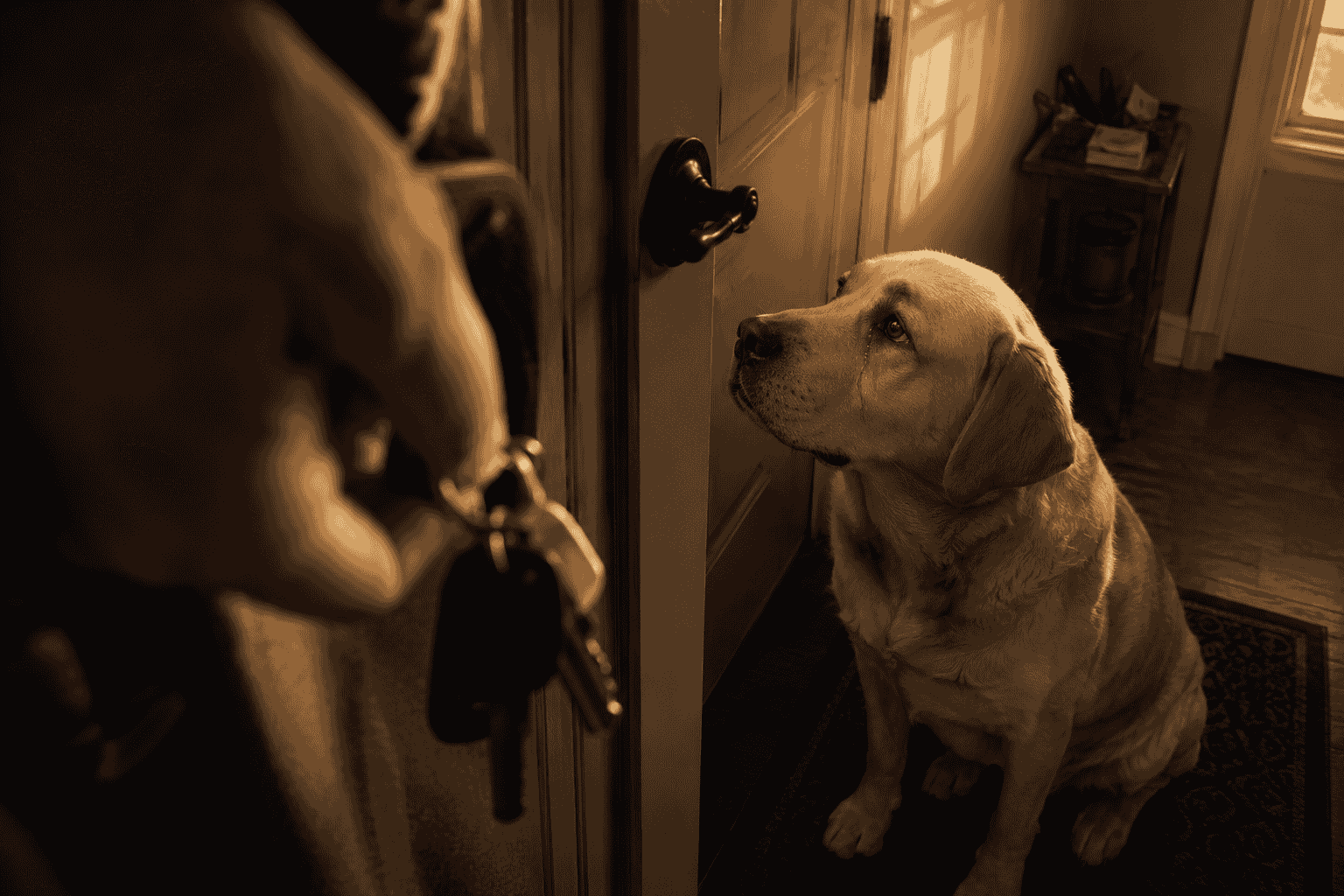
It breaks your heart every single time. You reach for your car keys, and right on cue, your furry best friend starts pacing, whining, or giving you those big, soulful eyes that make you question if you really need to leave the house. I’ve been there more times than I can count with my dog Simba. Even my cat Tom would sometimes give me that judgmental look, like “You’re really doing this to him again?”
If this sounds like your daily struggle, you’re definitely not alone. After 15 years of living with dogs (and one very opinionated cat), I’ve seen separation anxiety in dogs up close. It’s not “bad behavior.” It’s real distress. In this guide, I’m sharing the signs of separation anxiety in dogs and how to treat it based on what actually worked for me and the many pet parents I’ve helped over the years.
What Is Separation Anxiety in Dogs, Really?
Think of it as a full-blown panic attack for your dog. Your pup isn’t trying to punish you or act out—they’re genuinely terrified of being left alone. When you walk out that door, their world feels unsafe.
This fear can lead to all sorts of behaviors they’d never do otherwise: nonstop barking, destructive chewing, or even injuring themselves trying to escape. Understanding this was a game-changer for me with Simba. Once I stopped seeing it as defiance and started seeing it as fear, everything shifted.
Common Signs of Separation Anxiety in Dogs
Every dog shows it differently. Some are quiet destroyers, others are loud criers. Here are the most common signs of separation anxiety in dogs I’ve observed:
Constant Barking or Howling: If neighbors mention your dog cries all day, pay attention. This usually kicks in minutes after you leave and continues until you return.
Destructive Chewing and Digging: Door frames, baseboards, furniture—Simba went through a phase where he targeted anything that smelled like me. It’s their instinct to “escape” and find you, and it can damage teeth or paws badly.
House Accidents: A potty-trained dog suddenly having accidents only when you’re gone is a classic stress signal.
Pacing, Drooling, and Panting: You haven’t even left yet, but they’re already circling the room, drooling excessively, or breathing like they just ran a marathon.
If several of these ring true, your dog is likely dealing with canine separation anxiety.
Why Do Dogs Develop Separation Anxiety?
There’s rarely one single cause, but these triggers are common in my experience:
Sudden changes in routine (like going back to office work after working from home)
Moving to a new house
Loss of a family member or another pet
Past trauma, especially common in rescue and shelter dogs
Simba had a tough start before he came to us, and those early experiences definitely played a role in his anxiety.
How to Treat Separation Anxiety in Dogs: What Actually Worked for Us
This doesn’t get fixed overnight. It takes patience, consistency, and lots of love. Here’s the step-by-step approach that helped Simba (and many others):
Step 1: Desensitize Your Leaving Routine
Dogs are experts at reading our cues. Picking up keys, putting on shoes, grabbing the bag—they all signal “You’re abandoning me!”
I started mixing it up: I’d grab my keys and then sit on the couch. Put on my coat and make coffee instead of leaving. Over time, Simba stopped spiraling at those sounds.
Step 2: Practice Short, Positive Departures
Start tiny. Step outside for 10-20 seconds, then come back before they get upset. Gradually increase the time. Reward calm behavior with a treat or praise. This teaches them that you always come back.
Step 3: Keep Comings and Goings Low-Key
No big emotional goodbyes or excited hellos. I learned to ignore Simba for a few minutes when I got home until he settled. It sounds cold, but it helps them see departures as normal, not dramatic events.
Step 4: Give Them a Job and Mental Stimulation
Boredom makes anxiety worse. Before leaving, I give a frozen lick mat with dog-safe peanut butter or a puzzle toy stuffed with treats. It keeps their brain busy and promotes calming licking behavior.
For extra security on walks, I eventually switched to a great escape-proof dog harness for small dogs that gave me peace of mind knowing Simba couldn’t slip away if his anxiety kicked in during outings.
Step 5: Exercise and Routine
A tired dog is a calmer dog. Long walks, play sessions, or fetch before I leave made a huge difference. Mental exercise is just as important.
When to Get Professional Help
If your dog is hurting themselves or destroying things dangerously, don’t wait. Talk to your vet. Medication can sometimes help take the edge off while you work on training. Positive reinforcement trainers were lifesavers for us too.
I also had to work on puppy biting issues with a younger foster dog, and the techniques overlapped a lot with anxiety management. If you’re dealing with that alongside anxiety, check out my guide on how to stop golden retriever puppy biting hands and feet.
Important Tips from Someone Who’s Been There
Never punish them for destruction when you get home. They won’t connect it to what happened hours earlier, and it only increases their fear.
Background noise (TV or calm music) helps many dogs feel less alone.
Crates help some dogs but make others feel trapped—know your dog.
Other questions I get all the time:
Will another dog fix it? Usually not—your dog misses you, not just company.
How long does it take? Weeks to months. Celebrate small improvements.
Natural calming treats? Some hemp or herbal options help mild cases, but check with your vet first.
Final Thoughts
Watching your dog struggle with separation anxiety in dogs is tough, but there is real hope. With time, the right techniques, and plenty of patience, both you and your pup can find calm again. Simba still gets a little nervous sometimes, but the difference from where we started is night and day. Tom the cat even seems less stressed now that the household is calmer.
You’ve got this. Focus on the calm moments, reward the good behavior, and remember—they’re not giving you a hard time, they’re having a hard time. Stay consistent, and you’ll both be happier for it.
Have you tried any of these tips with your dog? Drop a comment—I love hearing what works for other families.
(Internal resources: Best Escape Proof Dog Harness, Stop Puppy Biting, and related guides on crate training alternatives, calming aids for dogs, and building rock-solid daily routines.)







Leave a Comment
Reader Comments
No comments yet. Be the first to comment.